Forward Head Posture: The Human Body’s Adaptation to the Digital Age
Forward head posture is a postural dysfunction in which the head shifts forward relative to the alignment of the shoulders, placing increased strain on the neck, shoulders, and upper back. It is commonly seen in people who spend many hours in front of computers, smartphones, or other digital devices, adopting postures with the head tilted downward and the upper body rounded forward.
Although it may appear to involve only the neck or head, it is actually a dysfunction of the body’s entire posterior chain—the myofascial structure extending from the soles of the feet to the back of the head. When this chain is unable to properly support the neck, normal alignment is compromised, causing the head to shift forward.
Research has shown a strong association between poor posture and forward head posture. Numerous studies have also demonstrated an association between scapular positioning and neck pain, highlighting how different parts of the human body interact with and influence one another.
At the same time, people suffering from chronic neck pain often experience:
- Reduced cervical range of motion
- Reduced movement speed
- Impaired proprioception, meaning reduced accuracy in perceiving the position of the neck
This dysfunction is not simply an aesthetic or ergonomic issue, but a sign of impaired biomechanical function that can affect both everyday movement and the health of the neuromuscular system.
By impaired biomechanical function, we mean a dysfunctional pattern of movement and, consequently, poor postural alignment.
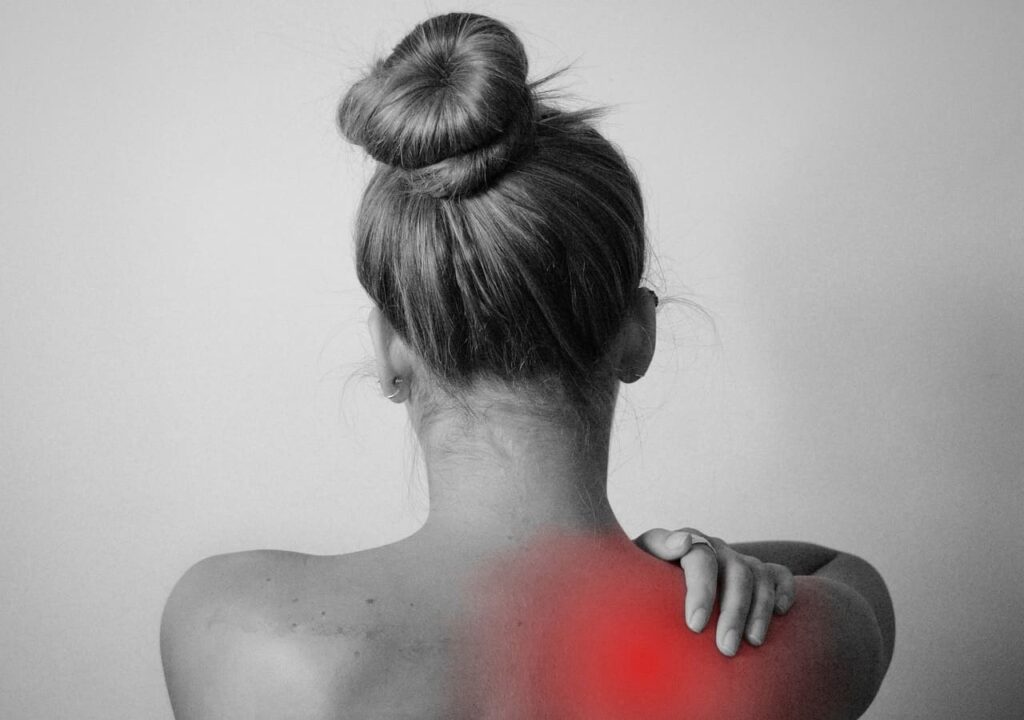
Passive Neck Stretches: Are They Really the Solution?
To assess whether static (passive) stretching is a solution for neck pain and dysfunction, we first need to understand how the human body and its muscles work—and, more specifically, how these stretches affect the joints.
When it comes to the neck, the same principle applies as with other joints:
Passive stretches provide short-term relief, but they often do not address the underlying cause and may contribute to additional micro-injuries, especially when performed without proper assessment.
Why Does the Neck Hurt?
Most tension in the neck area is not simply a local problem. Instead of pulling your head from side to side to “loosen” your neck, you need to work on the body’s entire posterior chain.
A more effective approach is active stretching through eccentric contraction:
You create tension in the back muscles, extend the thoracic spine, and simultaneously flex the cervical spine, creating a controlled lengthening of the back of the neck.
This type of active release provides greater control over movement rather than simply offering temporary relaxation.
Why Does the Neck Shift Forward?
Forward head posture is not the problem itself—it is the symptom. It is a compensation made by the body due to insufficient thoracic extension and the inability of the posterior chain to maintain proper alignment of the head.
In conclusion, pain associated with forward head posture is a symptom, while the forward shift itself is a compensation for deeper postural dysfunctions.

A Long-Term Solution — Not Just Pain Relief
In today’s world, where we spend many hours using digital devices, the solution isn’t to change jobs. The solution is to provide the body with the right stimuli.
With the Functional Patterns method, we can address the root cause of the problem rather than simply treating the symptom.
How?
Assessment
Postural and gait analysis to identify the underlying cause of the forward head position.
Identifying the Cause
Through assessment, the individual develops greater body awareness and learns how to position their body in better alignment.
Spinal Activation
Targeted activation of the thoracic extensors and pelvic floor stabilizers to help prevent compensatory movement in the lumbar spine.
Integration Rather Than Isolation
Instead of static stretches or isolated neck exercises, we work with the body as a whole, creating active lengthening where needed and strengthening where required.
CONCLUSION
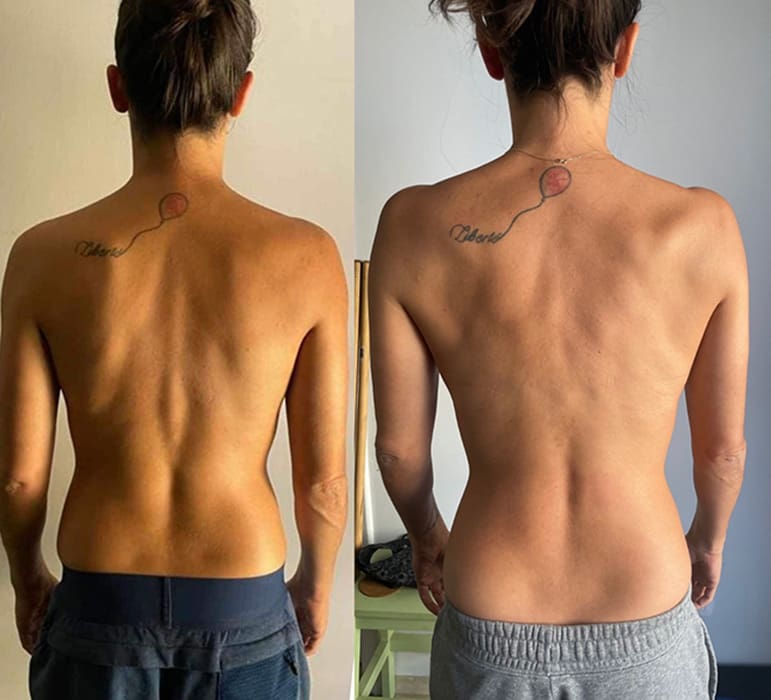
Based on the above, cervical syndrome—and forward head posture in particular—is not an isolated problem of the neck, but rather the result of broader dysfunction in the body’s biomechanics and posture. Passive stretching may provide temporary relief, but it does not address the underlying cause, which lies in weakness and poor coordination of the posterior chain and insufficient thoracic extension.
A long-term solution requires a holistic assessment, targeted activation, and the integration of movement patterns that support the body’s natural function, as applied through the Functional Patterns method.
This approach can help restore alignment, reduce pain, and meaningfully improve quality of life, even in an environment where the physical demands of daily digital device use have become a part of everyday life.
Sources
- Straker, L., Smith, A., Campbell, A., & O’Sullivan, P. (2010). Are neck pain and posture related? Physical Therapy Reviews, 15(2), 115–116. https://doi.org/10.1179/174328810X12719009060029
- Mehri A, Letafatkar A, Khosrokiani Z. Effects of Corrective Exercises on Posture, Pain, and Muscle Activation of Patients With Chronic Neck Pain Exposed to Anterior-Posterior Perturbation. J Manipulative Physiol Ther. 2020 May;43(4):311-324. doi: 10.1016/j.jmpt.2018.11.032. Epub 2020 Jul 25. PMID: 32723668.
- Horváthné Tóth B, Beleznai V, Friedli É, Salamon A, Császár G. Az okostelefon testtartásra gyakorolt hatásának vizsgálata egyetemista hallgatók körében [Examining the effects of smartphones on posture among university students]. Orv Hetil. 2025 Mar 30;166(13):494-502. Hungarian. doi: 10.1556/650.2025.33266. PMID: 40159119.
- Hesby BB, Hartvigsen J, Rasmussen H, Kjaer P. Electronic measures of movement impairment, repositioning, and posture in people with and without neck pain-a systematic review. Syst Rev. 2019 Aug 27;8(1):220. doi: 10.1186/s13643-019-1125-2. PMID: 31455393; PMCID: PMC6710866.